
Years ago, I had a client several states away who had become harder and harder to reach. They were an important client, and I needed answers, but distance made the situation feel strangely powerless. I could call, email, follow up, and escalate as much as I reasonably could, but at some point, there was only so much I could do from behind a screen.
I was talking through the situation with my business coach at the time, John Dane, when he said something that stopped me.
"Get on a plane and go out there."
I laughed because I thought he had to be kidding. I was a woman running a small remote business, still building my confidence, and this was a much larger client in a much bigger pond than I felt I belonged in at the time. The idea of booking a flight and showing up felt bold in a way I was not sure I had earned yet.
But John was not kidding.
He had a way of making you consider what might be possible before you fully believed you belonged there. He was not the kind of mentor who offered empty encouragement or told you to go chase your dreams in some vague, inspirational way. He believed in people in a way that showed up in action, and with me, that mattered.
He did not just say he believed in what I was building. He trusted me with his own work. He referred me to other people. He put his name, his relationships, and his confidence behind the belief he said he had in me. That kind of belief lands differently because it is not just encouragement. It is evidence.
I remember him once describing where he saw me at the time and then raising his hand higher to show where he believed I could go. I am not sure I could see it yet, but he could. That is one of the things great mentors do. They do not only see who you are. They see something you may not be able to see yet, and they help you believe it is not as far away as it feels.
So I booked the flight.
I told the client I was coming out the following week, and suddenly the dynamic changed. They could not avoid the conversation in quite the same way once I was willing to show up in person. That trip became the beginning of a stronger relationship with that client, and eventually, going there became a regular part of how I served the account.
But what actually changed was not the flight. It was how John helped me think about my own authority. He understood that the issue was not only communication, responsiveness, or client management. It was whether I was willing to step into the role I was already trying to grow into.
Good mentorship is not one-size-fits-all
I have been fortunate to have several mentors throughout my life and career. Some were formal coaches or advisors. Some became friends. Some entered my life for a specific stretch of business, and others have remained steady voices long after the original relationship changed.
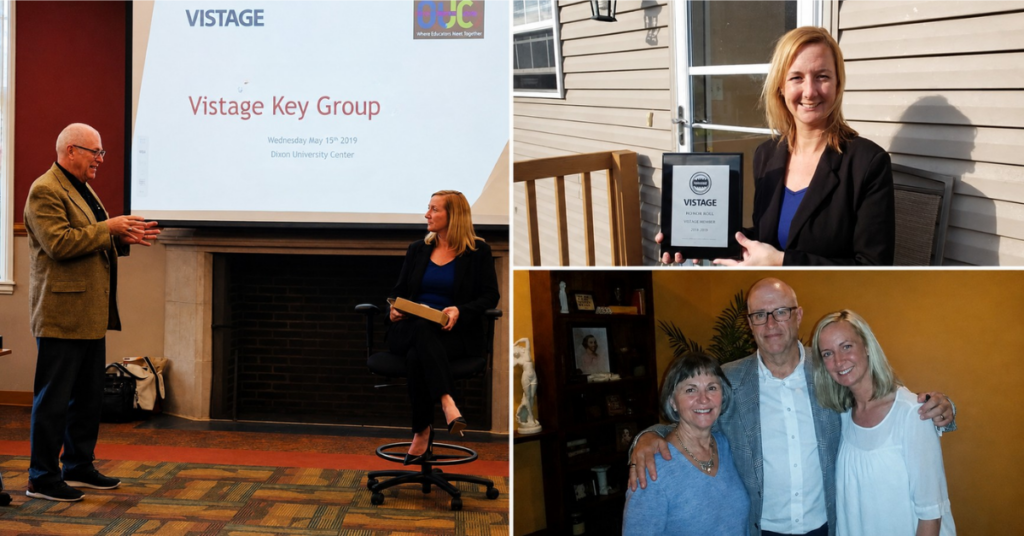
John eventually became my Vistage chair. He was also a client for years. Now I would call him a friend, but he is still the kind of person I can call when the ground feels shaky and I need someone who knows enough of the history to ask a better question.
When this past year brought some difficult moments in my business, he was one of the people I called. Like a good mentor, he did not only listen to the story. He asked me what I had learned from it, which is not always an easy question to answer, especially when you are still standing in the middle of it.
I knew what he was getting at. I also knew the answer was complicated. It was not as though I had not been trying to grow, lead well, make responsible decisions, or move the business forward. The harder truth was that I could see some of what had happened, but I did not yet fully know how I could have stopped it. Those are the kinds of questions good mentors ask, not because they are trying to make the situation simple, but because they know the real learning is usually underneath the first answer.
Advice can be useful. Sometimes we need someone to tell us what they would do, what they have seen before, or what step might make sense next. But mentorship works differently. It helps people examine the way they are seeing the situation in the first place, not just what to do about it.
Direction is not the same as development
There is a place for direction. Sometimes a person needs the process, the standard, or the expectation spelled out clearly. Not every moment needs to become a coaching exercise, and not every task requires a deep conversation about purpose.
But development asks something else. It asks whether the person understands the work beneath the work, whether they know what to look for, what questions to ask, and how to recognize the difference between completing the assignment and actually carrying the responsibility. That difference can be hard to coach, because so much of it lives in judgment.
I have seen this with people who were technically doing the work, but something was still missing. The deliverables were happening, the checklist was being followed, and the obvious responsibilities were covered, but the larger awareness was not there yet. They were not anticipating what might matter next, noticing shifts in the environment, or connecting the task in front of them to the broader expectation around the role.
It is easy in those moments to say, "Be more proactive" or "Think more strategically." I have heard versions of that myself, and the problem is that those phrases can sound clear to the person saying them and almost useless to the person receiving them. If someone does not already know what "proactive" looks like in that specific role, they may fill in the blank with the only version they understand.
Maybe they check in more often, send more reminders, or stay closer to the calendar. None of those things are necessarily wrong, but they may not be what the role actually needs. Proactive might mean noticing a trend before anyone asks about it. It might mean bringing a point of view on an opportunity before the client realizes they should be paying attention, or connecting something happening in the culture to the client’s goals and saying, “This is worth considering.” Those are very different versions of the same word, and if no one helps define what it means in context, the person is left trying to interpret a soft skill as though it were a clear instruction.
The question depends on the person
The more I have led and coached people, the more I have learned that there is no single question that works for everyone.
Sometimes someone needs confidence. They are closer than they think, but they cannot see it yet. Sometimes the work is refinement. They are already doing nine out of ten things well, and the right conversation is about the one shift that could move them from good to great.
Other times, the gap is larger. The person may be completing the tasks but missing the role behind the tasks, and that is when a question like, "What do you think you are here to contribute beyond the task list?" can reveal a lot. That question is not meant to be a test. It is meant to show the frame someone is operating from.
I wish someone had asked me something like that when I was younger. In my twenties, I often knew what I was supposed to produce, but I did not always understand what people were really evaluating. I could feel the disconnect, but I did not know how to name it. I would hear that I needed to be more of this or better at that, but no one helped me understand what that actually looked like in practice.
Maybe I would have answered in terms of tasks when the real expectation was ownership. Maybe I would have focused on doing what I was told when the role required me to notice what had not been said. Maybe I would have thought success meant completing the assignment, while someone else expected me to understand the larger reason behind it. That kind of conversation could have changed a lot for me, not because it would have handed me the answer, but because it would have helped me see the frame.
Instead, I spent a lot of time wondering what I was doing wrong when part of the issue was that no one was really coaching me toward the thing they expected me to become. I was being told to think critically without being shown what critical thinking looked like in that environment. I was being told to be more strategic without anyone helping me understand the judgment behind that word.
At some point, someone suggested I might be an entrepreneur, and I remember wondering whether that was just a polite way of saying I was difficult or bad at taking direction. Over time, I came to understand it differently. I did need to learn in a different way. I needed space to test things, ask questions, and figure out what made sense through experience. That path eventually gave me a business, a team, and a much clearer understanding of how I think. But I still wonder how much time I might have saved if someone earlier in my career had known how to ask better questions.
Coachability matters too
Of course, mentorship only works when the person being mentored is willing to be coached. You can create the opportunity, ask thoughtful questions, offer feedback, and build a path for someone's growth, but you cannot make them walk it. The other person has to be willing to examine their own assumptions without immediately defending them.
That does not make feedback easy. Even useful feedback can sting, especially when it touches something we thought we were already doing well. Being coachable does not mean agreeing with everything someone says. It means staying open long enough to understand what the feedback might be trying to show you, and that has been one of the harder leadership lessons for me.
I care about the people I bring into my work. I want to believe in them, invest in them, and help them become better than they were when they started. But if someone does not want to grow themselves, there is only so much a mentor can do.
The best development happens when both sides are doing real work. The mentor is not simply handing down conclusions, and the person learning is not simply waiting for instructions. There has to be a shared willingness to examine the gap between what is being produced and what the work actually requires. That is where mentorship can get complicated. If a leader is too directive, the person may learn how to satisfy that leader without learning how to make a sound judgment on their own. They learn the preference, the phrasing, or the expected answer, but not the thinking underneath it, and that is dependency more than it is development.
Mentors still need mentors
I have been in leadership long enough to know I do not need another me. Frankly, one of me is plenty.
What I want is not someone who thinks exactly the way I think, uses the same language I use, or makes the same calls I would make in every situation. I want people who can think for themselves, ask better questions, and develop enough judgment that they do not need to borrow mine every time something gets complicated, even though that is slower than giving the answer.
It is also harder, because it requires you to let people struggle with the thinking instead of rescuing them from it too quickly. It means asking the question when you already know the answer. It means letting someone test an idea, explain their reasoning, and see where their own thinking holds or breaks. A good mentor is not trying to install their own judgment into someone else. They are trying to help someone build their own.
That distinction matters to me because the best mentors I have had did not make me more like them. They helped me become more thoughtful as myself. They changed how I approached the work, not by telling me exactly what to think, but by helping me understand what I was really looking at.
I am still grateful for that kind of mentorship because I still need it.
There are days when the immediate problems get so loud that they start to shrink my sense of what is possible. A difficult conversation, a messy project, or the pressure of carrying what is right in front of me can make the bigger picture feel farther away. The right mentors do not ignore those realities, but they also do not let me confuse a hard day with the whole story. They remind me of the path I said I wanted. They ask whether I had the conversation, made the connection, followed up on the opportunity, or took the next step toward the kind of leadership I keep saying I want to grow into.
I hope I carry that into the way I lead other people, not perfectly, but with enough humility to remember that growth is not something we finish. I do not think we ever outgrow the need for people who help us see beyond the moment we are standing in.

